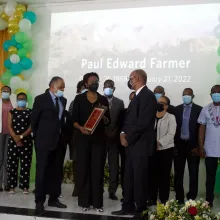
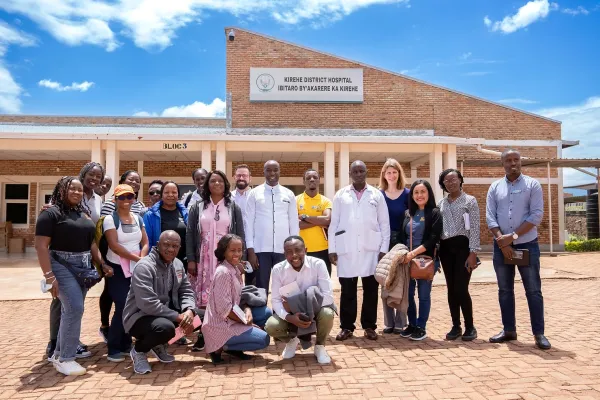
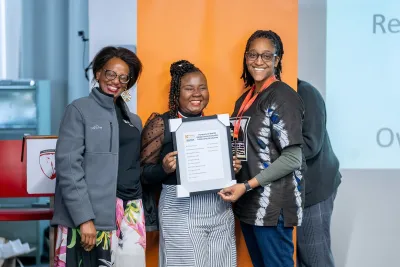
In February 2023, a group of 30 nurses from 8 different countries gathered in Rwanda to take part in an intensive fellowship program. Among them were three nurses from Haiti, Thamar Julmiste, Gretta Joseph and Ruth Butair, who represented Zanmi Lasante (ZL) in Rwanda. Their aim was to gain practical leadership skills during the program, which they could then share with the nurses and midwives they work with in Haiti.
Gretta Joseph, a member of ZL’s healthcare team since 2009, had been looking forward to this trip for two years, but it had been postponed due to the Covid-19 pandemic. Finally, the opportunity presented itself and Gretta couldn’t contain her happiness: “It was so important. There was so much effort to work with us and so much patience, just so we could participate in the program in Rwanda.”, she shared.
The Global Nurse Executive Fellowship is a global fellowship program for nurse executives through Partners in Health (PIH). Extending over a 12-month period, the main aim of this program is to train nurse executives but also to create a network of nurse referents within the facility. Having started in 2017, 13 nurses from 6 countries have already successfully completed this program. By May 2023, 8 more will be added to this list. The year-long program includes three intensive one-week bootcamps, a year-long curriculum and a capstone project aimed at improving patient outcomes and care delivery.
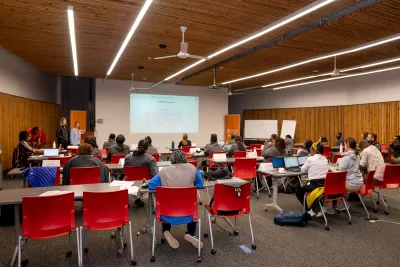
This was the first time since 2018 that these healthcare professionals had been able to meet face-to-face as part of the program. Through a series of site visits, exchanges and retreats, together they were able to identify innovative solutions for the nurse manager network in 8 countries. “We have acquired a model to replicate in Haiti,” says Miss Thamar Julmiste, who joined HUM in 2017 and currently manages the ZL’J9 project.
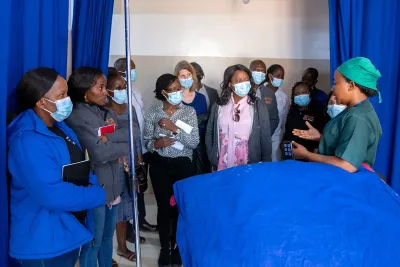
Miss Ruth Butair found the experience very inspiring. She shares:
”I gained a lot of knowledge and skills that I can apply at HUM. We worked collaboratively to find innovative solutions for our patients.”
The three participants observed many similarities between Rwanda and Haiti, particularly when it comes to healthcare challenges. For example, both countries have faced problems with high neonatal mortality rates. Haiti currently holds the highest rate in the Caribbean, with rates varying between 22 and 26% at HUM. Gretta explains, “They shared their protocol with us, which we can use to update our own procedures and more effectively correct flaws in our system.”
The nurses identified specific changes to be implemented at HUM. Chief among them is the sharing of information between nurses and patients. They immediately agreed on the idea of developing a document to inform patients and their immediate families of their rights.
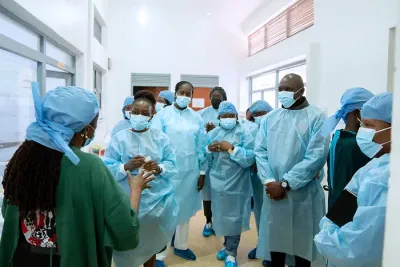
”Patients need to be more involved in the care they receive,” says Miss Ruth. Although there is already a close relationship between PIH Haiti and Rwanda, as there have been trainings for Haitian healthcare professionals in Rwanda in the past, the participants want this program to be a catalyst for even more learning opportunities.
Miss Gretta expresses her admiration for the work being done in Rwanda despite limited resources, saying:
”They manage to achieve so much positive with so little. I firmly believe we can do the same in Haiti.”
She remains hopeful and optimistic about the potential for change and improvement.