
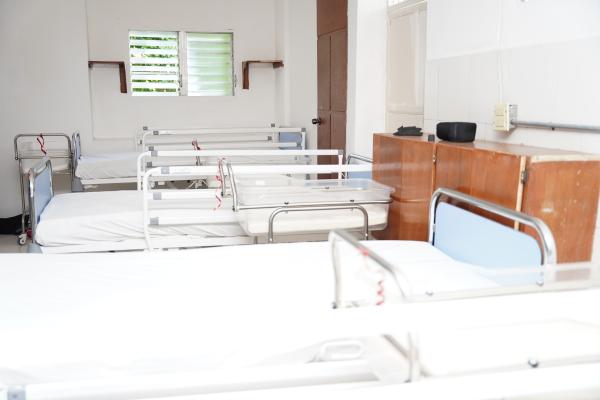
Before the new ward opened, women who had just given birth would sometimes have to sit on a bench while waiting for a bed to become available. Dr. Fridjof Robergeau, an obstetrician-gynecologist and head of the maternity ward at Bon Sauveur Hospital in Cange (HBSC), describes this situation as one of the most visible consequences of a problem that had become a daily occurrence: the ward’s capacity was no longer sufficient to accommodate the number of patients it had to care for.
On September 3, 2026, HBSC inaugurated a new maternity ward equipped with eight beds. The expansion increases the unit’s inpatient capacity and should enable staff to better organize patient care, monitoring, and traffic flow within the maternity ward, particularly after deliveries.
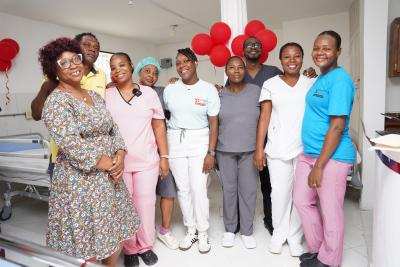
The pressure on available space was not just a matter of comfort. When a ward is operating at maximum capacity, finding a place for a new patient, moving between beds, monitoring hospitalized women, or managing an emergency becomes more challenging. According to Dr. Robergeau, the team continued to provide care under these conditions, but the lack of space complicated their work and could also lead to tensions with patients or family members facing long wait times.
This increase in demand intensified after the closure of the Mirebalais University Hospital (HUM) in March 2025. According to Josette Jean-Louis, Kay Manmito coordinator at the HUM, a significant number of pregnant women who previously used that maternity ward have turned to other facilities, notably the Bon Sauveur Hospital in Cange.
The data available in Cange provide an indication of the volume of care the department must handle. Between July 2025 and June 2026, the HBSC recorded approximately 29,630 cases handled by its maternal and reproductive health services. This figure includes prenatal consultations, family planning, gynecological consultations, and deliveries. It therefore does not correspond solely to the number of births but serves as a measure of the sustained use of these services over the course of a year.
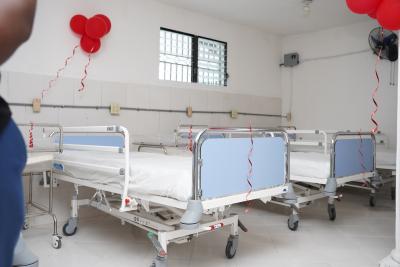
The decision to add eight beds was based on this operational reality. The room’s layout, equipment, and finishing represent an investment of 1,138,000 gourdes, excluding taxes. According to Jean Jean Roy Gracia, director of the HBSC, the funding comes from the hospital’s internal revenues, with support from the Executive Board of Zanmi Lasante, particularly for the purchase of equipment.
“This achievement is not the result of one person’s work, but that of a team that identified a need, sought a solution, and worked together to provide a concrete response to the women who come to Cange for care.”
Dr. Jean Sauvener Ferle, medical director of the HBSC.
For Mosseline Claude, head nurse of the maternity ward, the additional space directly impacts daily operations. A better-suited capacity should facilitate patient flow, patient monitoring, and the distribution of staff duties. For women who have just given birth, it should above all reduce situations where the availability of a bed becomes an additional challenge during their recovery and while receiving the necessary care.
“Our goal is to provide every woman with safe, dignified, and high-quality care throughout her stay in the maternity ward.”
The increase in patient volume will continue to require appropriate resources and organizational measures. The eight new beds now provide the department with additional capacity in an area where the lack of space was having tangible consequences for both patients and staff. Their value will be evident in very simple situations: a woman who has just given birth can have a bed, the team can monitor her properly, and the department can admit the next patient under better conditions.