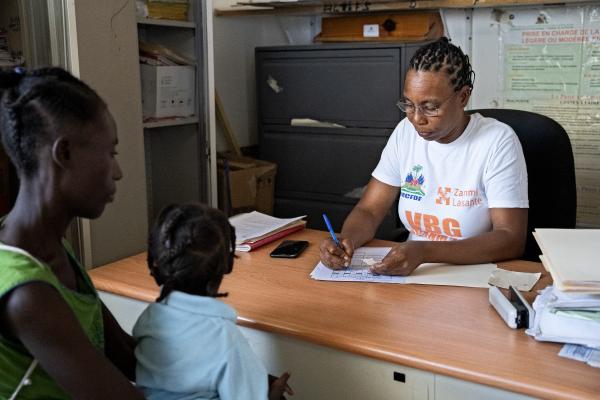
At 18 months of age, a child enrolled in Zanmi Lasante’s Community Nutrition Program had an upper arm circumference of 108 millimeters and had experienced significant weight loss. After six weeks of treatment with Nourimanba and close monitoring, his upper arm circumference reached 125 millimeters. His overall condition had improved, and his mother also reported that his appetite had returned.
This outcome is the result of a series of steps that begin well before the product is administered. It is necessary to screen for malnutrition, determine the appropriate course of care, provide treatment, monitor the child regularly, and support the family over several weeks.
Jarlyne Chalorin, a nurse with Zanmi Lasante’s community nutrition program, works with children aged 6 to 59 months. She conducts screenings, helps manage their care according to established protocols, and monitors their clinical and anthropometric progress.
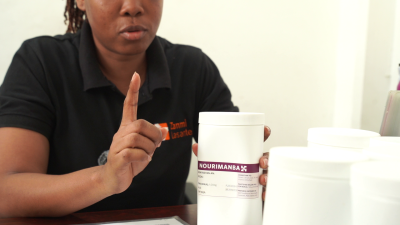
“Nourimanba is used in cases of moderate or severe malnutrition,” she explains. During treatment, the teams monitor weight and upper arm circumference weekly. They also assess the child’s appetite, general condition, and the presence of any complications.
This monitoring allows them to adjust the treatment plan and identify situations requiring additional attention. She also asks families to return regularly for follow-up visits and to follow the instructions provided for using the product.
During the 2025–2026 fiscal year, 22,089 children were screened across the entire Zanmi Lasante network. During this same period, 72,851 kilograms of Nourimanba were distributed, along with 309,640 sachets of Plumpy.
Discharge data also makes it possible to track some of the outcomes of care. During the fiscal year, 5,973 children were discharged from care, including 3,946 who were considered cured according to the program’s criteria.
These figures reflect the scale of the program’s activity, but they do not tell the whole story of the work required for a child to complete their treatment. Jarlyne notes, in particular, that some families have difficulty paying for transportation to follow-up visits. It also happens that the food intended for the malnourished child is shared with other children in the household. An insufficient understanding of the importance of regular checkups can also lead to treatment interruption.
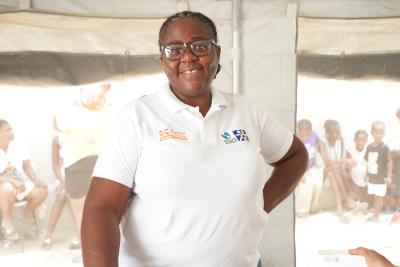
Jarlyne Chalorin, infirmière au Programme de nutrition communautaire de Zanmi Lasante.
Teams address these challenges through nutrition education, family follow-up, and, when conditions permit, the organization of mobile clinics. The challenge is a practical one: a product is only effective in helping a child recover if the child can be identified, begins treatment, and remains under follow-up for a sufficiently long period.
This process also depends on the work carried out at the Nourimanba production center in Corporant. Between January and December 2025, the center produced 75,631 kilograms of Nourimanba. This production primarily supported Zanmi Lasante’s nutrition programs, particularly the mobile clinics and nutrition services in Boucan-Carré and Hinche. Activities in the Saint-Marc region were more limited during this period.
The center relies in part on locally produced raw materials. The peanuts used to make Nourimanba come mainly from the Central Plateau, particularly from areas such as Savanette, Corporant, Belladère, and Lascahobas. This supply remained relatively stable in 2025.
The situation was different for several other essential ingredients imported from the United States. Their delivery depends largely on the port of Port-au-Prince and national highways. Traffic disruptions and clashes on certain routes caused supply delays and complicated logistics.
The center’s operations were themselves severely disrupted in April and May 2025 following the violence in Mirebalais. Production gradually resumed as conditions in the area allowed.
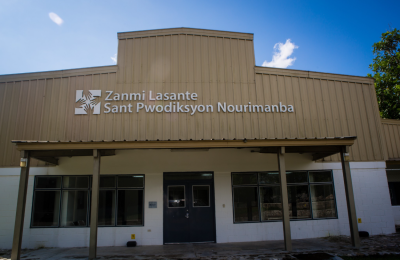
The consequences were also felt beyond the factory. Several mobile clinics and nutrition programs had to be suspended or scaled back. In particular, interventions in Petite-Rivière de l’Artibonite, Verrettes, and other localities in the Saint-Marc region were limited. According to center officials, these access difficulties contributed to a decline in the use of Nourimanba in these areas and to more interruptions in nutritional follow-up.
Maintaining care therefore requires action on several levels. Jarlyne hopes to strengthen nutrition education, improve the availability of Nourimanba based on children’s needs, and facilitate the referral of children with complications to a specialized nutrition unit. She also emphasizes the importance of being able to provide dry rations or other forms of food assistance to families when necessary.
For its part, the production center has identified specific needs: securing the necessary resources to purchase raw materials, maintain or replace certain production equipment, and return to more consistent production levels. It also aims to resume the production of other nutritional products, notably Akamil dry rations.
The progress of the child being monitored by Jarlyne helps explain why each of these steps matters. Between the 108 millimeters measured upon admission and the 125 millimeters recorded six weeks later, there was Nourimanba, but also consultations, repeated measurements, the work of a team, and the involvement of her family.
Producing the treatment is essential. Ensuring that it reaches the child who needs it, when they need it, and that the child can complete their course of treatment, is just as essential.