Non-communicable diseases are not a statistical abstraction. They are visible in villages, in isolated homes, among younger and younger adults who struggle to understand why their hearts tire. Hypertension is particularly prevalent in these communities. Studies carried out in Haiti show that between 20 and 30 percent of adults are hypertensive, a proportion that climbs rapidly after the age of 40. Yet the majority are unaware of this fact. Many do not seek medical advice, either because they cannot afford it or because they are not close to a health center. The poorest people are often the last to access a diagnosis.
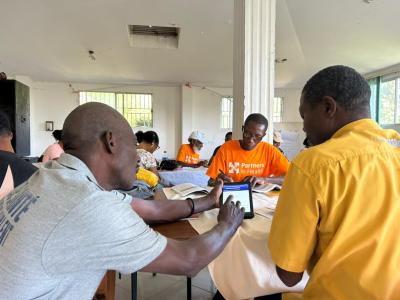
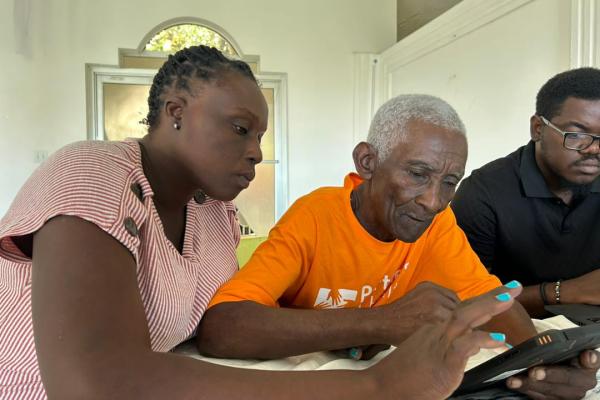
It is in this context that Hôpital Bon Sauveur de Cange has launched an intensive training course for twenty-three Multipurpose Community Health Workers to improve the use of tablets in monitoring non-communicable diseases, in particular hypertension. The objective is clear. The aim is to strengthen an essential link in the care of patients who live far from healthcare facilities and, for many, are unable to travel regularly.
Over 5 days, the agents learned to navigate the CommCare platform’s modules, record data, synchronize information and solve the most common problems encountered in the field. Ten agents also received a tablet, which will enable them to fully integrate the digital system and improve coverage in remote locations.
The trainer, Paul Kerlin Henry, emphasized a point often invisible in discussions about NCDs. The quality of follow-up depends on the regularity of visits and the ability of teams to rapidly transmit information to clinics. Without this, patients arrive too late or interrupt their treatment. The training therefore aims to give agents the tools they need to follow up families in a structured and reliable way.
One of the highlights came from a participant who came from Morne Michel. She confided what this training means in concrete terms for her work.
“I’m much more comfortable using the tablet to record patient data.”
In rural areas, health workers are often the first and sometimes only point of contact for people who don’t know their blood pressure or the associated risks. Correct data capture enables clinical staff to identify high-risk individuals more quickly and organize appropriate care.
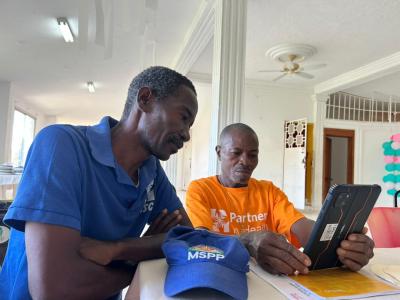
The progress made this week will have a direct impact on families. They will enable earlier detection of hypertension, better continuity of treatment and enhanced coordination between community teams and clinical services. In a country where less than half of hypertensive patients receive regular treatment and very few manage to stabilize their blood pressure, every improvement in the follow-up system represents a significant advance.
The training is part of a wider reality. Haiti faces a double burden. Infectious diseases persist, but cardiovascular disease, diabetes and kidney complications have become major causes of death, particularly in poor areas where access to chronic care is limited. Strengthening the skills of community agents does not replace a structured national system, but it does create concrete points of support for families. It allows us to reach out to people who would never go as far as the hospital.
In Cange, this initiative shows that targeted investment can improve chronic care for patients. It is also a reminder that the response to NCDs does not depend solely on drugs and diagnostics. It relies on a human link. Community workers know the families, the paths, the daily difficulties. They know who has lost their job, who is struggling to pay for transport, who can’t afford a blood pressure monitor.
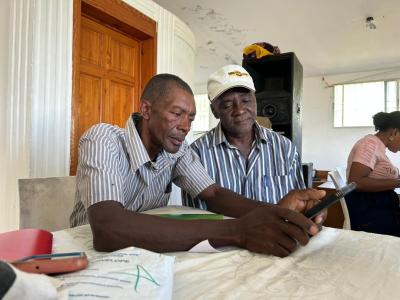
Building their digital skills is one more step in ensuring that this work is supported by reliable, usable and accessible information for network clinics.
The training ends, but its impact begins in the homes where agents will resume their visits. That’s where prevention comes into play. It’s where every piece of data correctly captured can help avoid avoidable hospitalization, complication or death.
Your support enables Zanmi Lasante to strengthen chronic disease monitoring programs in rural areas where families face significant barriers to accessing care. Every contribution helps train community agents, provide digital tools and improve continuity of care for hypertensive patients. You can support these efforts by making a donation.