
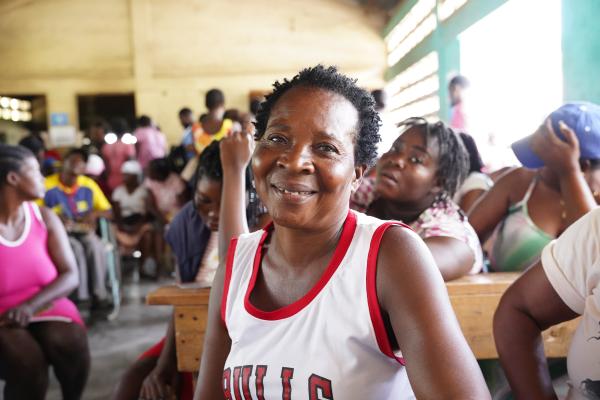
When armed violence broke out in Mirebalais on March 31, 2025, Angella Florvil didn’t have time to think. Like so many others, she fled her home to save her life. At 54, this mother of three and grandmother of three had thought she had already found a place to rebuild her life. Originally from Port-au-Prince, she had moved to Mirebalais more than five years ago to escape the insecurity plaguing her neighborhood. But the violence caught up with her.
Her husband died during this crisis. Her home was set on fire. She first found refuge in Lascahobas before being forced to flee once again as the violence spread. Today, she lives with her family in a shelter set up at the École Nationale de Croix-Fer, in the town of Belladère.
Before these events, Angella made a living running a small business. Now, she no longer has a steady income and relies heavily on the generosity of others to provide for her family.
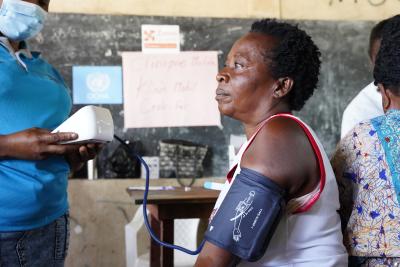
Her story is similar to that of many people living in this temporary shelter. All of them have left part of their lives behind. Many now live in precarious conditions, with limited access to clean water, food, sanitation, and health care. For some families, seeing a doctor has become nearly impossible due to a lack of financial resources or the inability to travel.
This week, medical care came to them. Thanks to a mobile clinic organized by Zanmi Lasante with support from the OCHA Humanitarian Fund, medical teams set up their services directly within the shelter. Doctors, nurses, and other healthcare professionals provided consultations, distributed essential medications, offered nutritional advice, and provided psychosocial support tailored to the families’ needs.
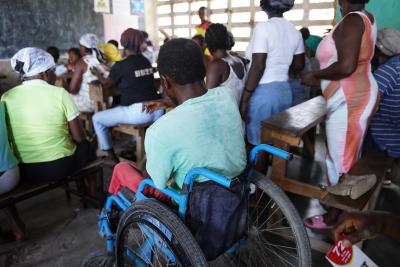
In total, more than 170 people received care, including children, pregnant women, older adults, and patients living with chronic illnesses.
Angella was one of the patients:
“When I heard there would be this mobile clinic, I was very happy. Ever since all these security issues began, I’ve fallen and my knee has been hurting constantly. I really needed to see a doctor, but I couldn’t afford to go to the hospital. Today, I was able to see a doctor, get medication, and receive advice. I’m very happy.”
Her story illustrates a reality that is affecting a growing number of families in Haiti today. According to the International Organization for Migration (IOM), more than one million people were internally displaced in early 2025 due to armed violence—more than three times the number recorded in 2023. Many have had to flee multiple times, leaving behind their homes, their livelihoods, and sometimes their loved ones.
To address these growing needs, Zanmi Lasante is implementing, with support from the OCHA Humanitarian Fund, a 12-month project in the Centre and Artibonite departments. The goal is to improve access to health care, nutrition, and protection services for displaced people as well as for host communities.
The project aims to provide primary health care to more than 15,000 vulnerable people, screen and treat 2,000 children suffering from acute malnutrition, and provide psychosocial support and protection services to at least 3,000 women and children at increased risk.
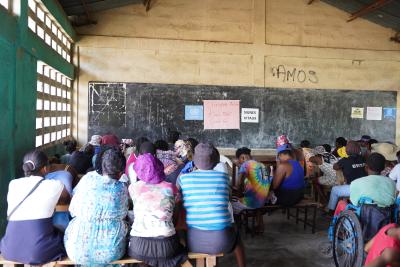
Just two months after its launch, several mobile clinics have already been set up in the communities most affected by population displacement. In Croix-Fer, consultations wrapped up at the end of the day. The teams packed up their equipment before heading out to other communities.
For the families they met that day, their difficulties are far from over. But they leave with medication, advice, follow-up care when needed, and, above all, the assurance that they will not be forgotten.
In many communities affected by forced displacement, mobile clinics are sometimes the only access to healthcare. Your support enables Zanmi Lasante to continue these efforts and provide essential health services where the need is most urgent.