

S. Registre Eugène knows that a patient who interrupts his or her treatment is not always lacking in information. Fear of being recognized, stigmatization, isolation or difficulties encountered in daily life can drive a person away from the health center and complicate regular medication intake.
As an accompagnateur supervisor at the Centre Médical Dumarssais Estimé in Verrettes, he works with people living with HIV and their families. He receives them at the center, follows them in their community and seeks to understand the obstacles that weaken their care path.
When a patient refuses to take his medication, Eugène begins by maintaining contact. He visits him, talks with him and takes the time to understand the reasons for his refusal. He may find him at home, in his shop or in another environment where conversation becomes easier.
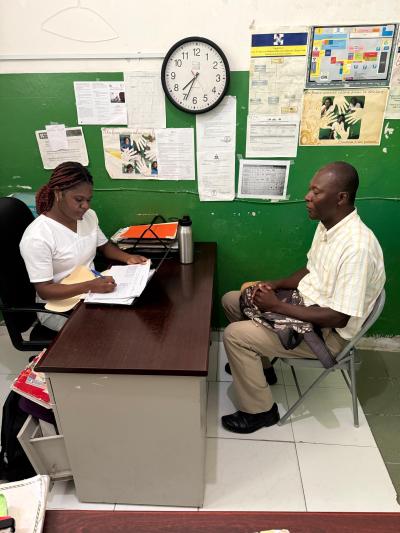
This approach takes time. It allows the patient to talk about his or her concerns, experiences and the views of those around them. It also helps the companion to determine the most appropriate way to continue the follow-up.
Eugène remembers a man who refused his treatment after suffering stigmatization. He began to visit the grocery store run by this patient, as an ordinary customer. The visits and exchanges gradually reduced the mistrust. A relationship was established, making accompaniment and resumption of treatment possible.
“To overcome the challenges of everyday life, you have to adopt an exemplary mentality, staying calm and quiet. This is what makes it possible to find harmony with patients who pose problems.”
This experience illustrates part of the work carried out by companions in HIV care. They intervene between consultations, when patients return to an environment where medical recommendations must be integrated with the constraints of daily life.
Accompagnateurs maintain the link between patients and healthcare facilities. They support regular medication intake, carry out visits, monitor absences from appointments and pass on to the clinical teams any difficulties encountered by those accompanied.
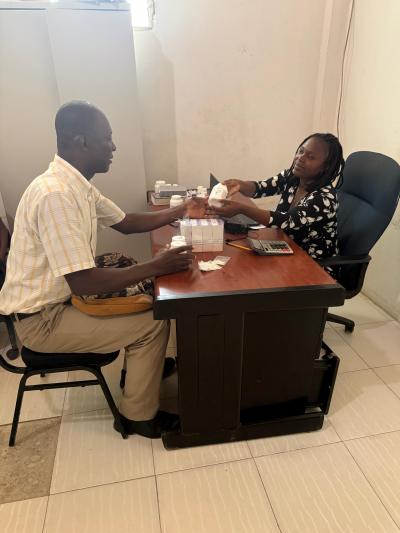
Zanmi Lasante’s HIV-Tuberculosis program combines clinical services with community and social follow-up. This organization provides medical teams with information on the realities that can influence treatment outside the health center.
The cost of transport, remoteness, food insecurity, poverty and stigma can affect a patient’s ability to continue care. A person may know when to take their medication and remain unable to follow their treatment without additional support.
Home visits are therefore an important part of Eugène’s work. They enable him to reach out to the elderly, vulnerable children and patients who are reluctant to visit the health center for fear of being recognized or judged.
These visits give accompagnateurs a more precise understanding of each patient’s situation. They can identify problems related to housing, food, family support or travel to the health facility. They can then share this information with the teams responsible for clinical follow-up.
Accompagnateurs also ensure a regular presence between two appointments. This continuity becomes particularly important when a patient starts missing consultations, stops answering calls or expresses doubts about his or her treatment.
Eugène adapts his or her intervention to each situation. Some people need precise information about HIV and medication. Others need time to talk about the difficulties they face. Some families need support to better understand treatment and how to support their loved one.
His work also includes an educational component. He encourages people to find out their status through screening, to take their medication at the right times and to follow the medical team’s recommendations.
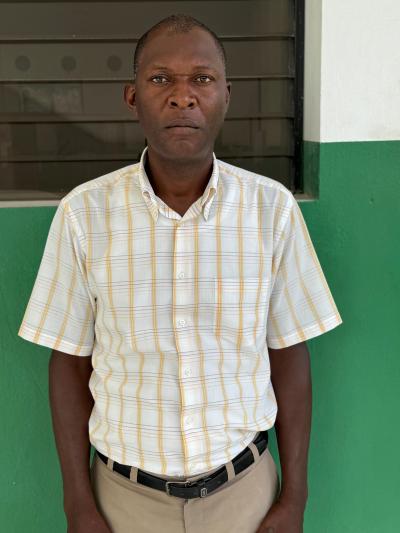
Regular intake of antiretroviral medication reduces the amount of HIV present in the blood. A permanently undetectable viral load protects the patient’s health and prevents sexual transmission of the virus. Maintaining treatment is therefore a central component of care.
Medication remains indispensable, as does the support that helps patients to take it over the long term. A prescription is no answer to fear of stigmatization, transportation difficulties or isolation. Accompagnateurs intervene precisely in this space between the medical prescription and everyday reality.
In the course of his work, Eugène sees patients resume their treatment, regain their strength and reconnect with health services. These developments are based on medical follow-up, the availability of medication and the relationship built up with the people responsible for accompanying them.
The role of accompagnateurs requires patience, listening and a good knowledge of the communities. Their proximity means they can spot difficulties earlier and intervene before the link with services is entirely severed.
HIV care relies on access to medication, the availability of clinical services and the presence of accompagnateurs capable of following patients in their communities. Your contribution helps Zanmi Lasante maintain testing, treatment, community visits and accompaniment for people living with HIV.